Local Vendor Gift Shopping: A Checklist for Unique Market Finds
A practical checklist for buying gifts from local market vendors — how to choose for a specific person,...

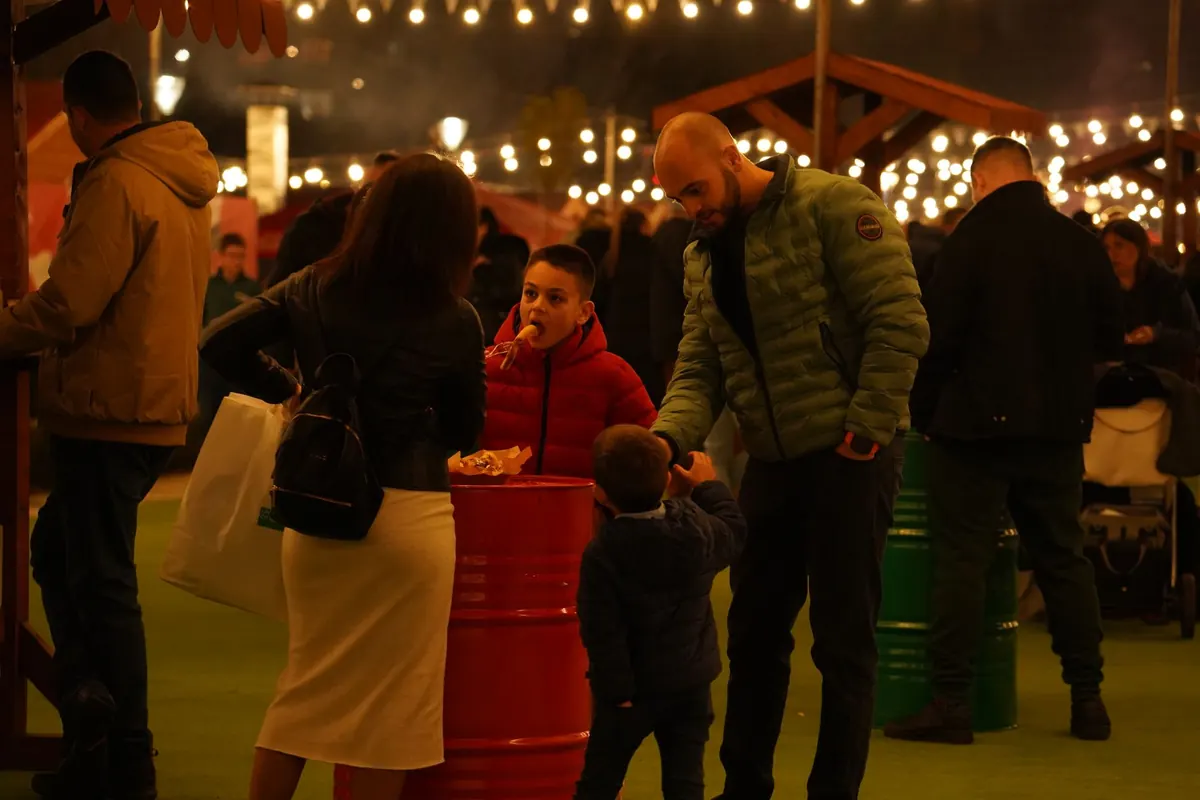
An evening market is one of the simplest family outings there is. No tickets, no set duration, no queue for a cloakroom, and a ready supply of food within arm's reach. It is also easy to get wrong. Arrive at the wrong hour and you spend forty minutes shuffling behind a stroller through a crowd that has nowhere to go. Forget the water and you will be buying a warm bottle at the first stall that sells one. None of this is complicated, but the families who look relaxed at nine o'clock are usually the ones who thought about six.
Most evening markets have a shape. The first hour is calm: vendors are still arranging crates, the aisles are wide, and you can actually see what is on the tables. Then, somewhere around the point when the food stalls open their griddles, the crowd thickens and the narrow lanes between stalls become one-way whether you like it or not. The last hour is often the loudest and the most scattered.
For a family with young children, aim to arrive in that first quiet hour and leave before the peak. You will get the best of the market, the vendors will have time to talk to you, and you will not spend the evening steering a stroller around people who stopped dead in the middle of the path.
Work backwards from bedtime rather than forward from dinner. If your smallest needs to be asleep by eight, a five-thirty arrival gives you a real visit instead of a rushed one. And decide your exit time before you leave the house, not while standing in a crowd with a tired child on your shoulders. The moment a child runs out of steam, the market turns from an adventure into a logistics problem. Leave on the good part.
Market food is wonderful and unreliable as a dinner plan. Queues move at unpredictable speeds, portions vary, and a hungry four-year-old does not want to hear that the good stall is just around the next corner. Give everyone a proper snack before you set out, then treat whatever you buy at the market as a pleasure rather than the meal itself.
If you do plan to eat there, choose your stall early, before the lines form, and pick one with seating nearby or a wall to perch on. Trying to eat a paper cone of something hot while standing in a moving crowd is a skill most adults have not mastered.
Pack things that do not crumble, melt, or need to be kept cold: bananas, plain biscuits, breadsticks, dried fruit, a bag of nuts if your family has no allergies, cheese that travels well. Skip anything sticky, anything with a bright glaze, and anything that will end up smeared across a vendor's tablecloth. Bring more water than seems reasonable. Cups get knocked over, bottles get lost, and evening air is deceptively warm.
If a child has a serious food allergy, plan to bring their food and ask stallholders directly about ingredients. Small producers often cook in shared spaces and may not have written ingredient lists, so a conversation matters more than a label. For any allergy or medical concern, follow the plan you have agreed with your own doctor.
Old market squares are beautiful and hostile to small wheels. Cobbles, kerbs, tram tracks, gravel paths, a step down into a lane you did not see. If you have a choice, bring the stroller with the big wheels, or bring a carrier and leave the wheels at home entirely.
If you do bring a stroller, keep the basket light. A loaded stroller becomes a plough, and you will spend the whole evening lifting the front wheels over joints in the paving. Consider parking it at the edge of the busiest section and walking the last stretch. Many events have a natural spot for this, usually near an entrance or a low wall.
Wagons look tempting and behave badly in crowds. They take the width of two people, turn like a bus, and sit at exactly ankle height for everyone behind you. Save them for open-air events with wide paths.
You do not need to spend the evening anxious. You need three small decisions made in advance.
First, a meeting point. On arrival, walk to the obvious landmark together, point at it, and name it. The fountain. The arch with the clock. The flagpole. Then agree that anyone who gets separated goes there and waits, and nobody leaves it to look for anybody else.
Second, a way to be found. For a child with a phone, a charged battery and an agreed check-in time is enough. For a child without one, write a parent's number on a wristband or a slip of paper tucked in a pocket, and teach them the rule: if you are lost, find someone standing behind a stall and ask them, because stallholders stay in one place and know who is running the event.
Take a photo of each child at the start of the evening, in the clothes they are wearing. It takes ten seconds and settles every later argument about what they had on.
Third, hands at the pinch points, not all night. Tell children where the crush happens and why you will hold hands there, and let them walk free in the open stretches. Negotiating this in advance heads off the tug-of-war.
Watch the cooking stalls. Griddles, fryers and open flames often sit at exactly the height of a small child's face, and a crowd pushes people forward without warning. Give those stalls a wide berth and hold hands there too.
A child with a purpose is a child who does not ask how much longer. Hand over the shopping list and let them tick things off. Ask them to choose one fruit for the week, pay the vendor themselves, and carry the change. Have them spot three things of a particular colour, or find the oldest-looking sign in the square.
The one-treat rule works better than a running negotiation: each child picks one thing, near the end, once you have seen the whole market. It stops the first-stall impulse buy and gives the evening a shape.
Decide the exit time when you arrive, and treat it as fixed. Do a final loop ten minutes before you mean to leave, buy the heavy things last so you are not carrying them around, and find the toilets before you need them rather than after. The last half hour of a market is the worst of the crowd, and leaving on a high note beats staying for one more stall. Say goodnight to a favourite vendor, take one last look down the lit lane, and head home while everyone still likes each other.
Photo: Vladi Nikolov / Pexels
A practical checklist for buying gifts from local market vendors — how to choose for a specific person,...
Evening markets do more than sell food after work — they turn a square into a meeting place and give small...
A practical guide to turning cheap market stall finds — day-old bread, sauce vegetables, beans, cheese...